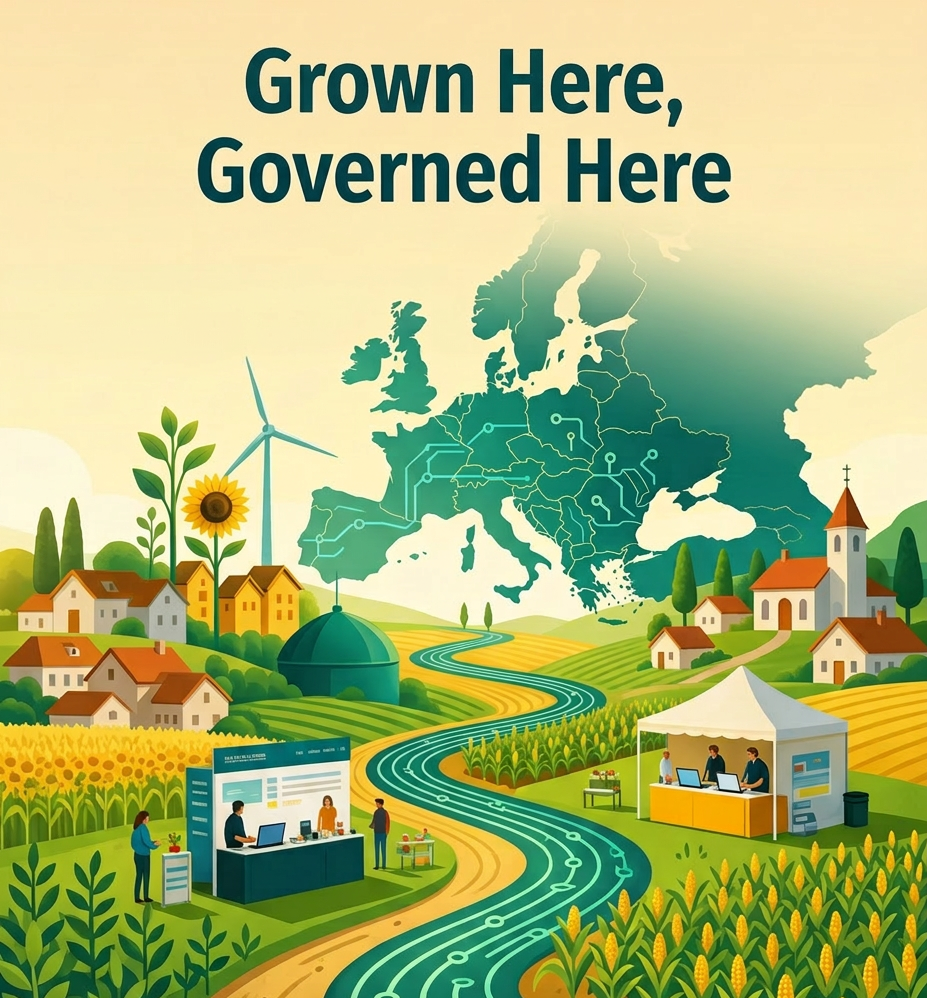
Grown Here, Governed Here: Roadshows, Hackathons, and rural innovation in the DRIVE Project

Introduction
The Cork 2.0 Declaration of 2016 called for rural areas to be attractive places to live and work. In the same period, Commission President Von der Leyen described rural areas as “the fabric of our society and the heartbeat of our economy” (Justin McCarthy, 2016). While ambition and willingness to restore the centrality of these regions – in the discourse and in reality – are true and apparent, data from the Long-Term Vision for Rural Areas (2021) shows that between 2015 and 2020 rural territories in the EU lost population at an average rate of 0.1% per year, while predominantly urban areas grew at 0.4% annually (Eurostat, 2023). EU documents have begun acknowledging what researchers call the “geography of discontent” – the spatial concentration of political disengagement and institutional distrust in the regions that European cohesion policy claims to prioritize (European Commission. Directorate General for Regional and Urban Policy, 2023). This gap between ambition and outcome is not a reason to dismiss such policies, but to continuously scrutinize them so they are implemented in the most efficient way. In the DRIVE project – whose main goal was to bridge that gap – the most instructive lesson came from a small detail: who sends an email, and in what language. When an EU-funded program reaches a Slovenian farmer through an invitation email sent by his local municipality, rather than a letter from a project office in Brussels or Milan, something has been designed correctly.
DRIVE (Driving Rural Innovation through Startup Villages across Europe), funded under Horizon Europe, is a 13-partner initiative spanning 11 countries, designed to support rural startups and SMEs in developing circular bioeconomy solutions through Roadshows, Hackathons, and mentoring. This article analyses the activities and outcomes of Roadshows and Hackathons led by nEUlakes arguing that its most significant contribution is the governance logic it embodied: to recognize that reaching rural communities requires linguistic, cultural and institutional translation that cannot be delegated to other technical partners.
Rural innovation (and how we talk about it)
The structural disadvantages faced by rural SMEs are well-documented. Urban businesses benefit from proximity to financial institutions, concentrations of young talents around universities, and advanced digital infrastructure; their rural counterparts operate in relative isolation from all three. In the bio-based economy — the sector that transforms renewable biological resources into food, materials, and energy — 40% of enterprises require public funding as a prerequisite to attract private financing, not because they are weak businesses, but because public endorsement functions as a credibility signal in a sector where private capital investment is scarce.
The “Startup Village” concept offers a partial response to this structure. It identifies rural areas as place-based — rooted in a specific territory and its biological resources — but not necessarily place-bound in their market ambitions. The concept implies something that EU rural policy rarely states directly: that local production chains are not a nostalgic preference but an ecological and economic logic. In a circular bioeconomy, waste is most efficiently transformed close to where it is generated; that is why DRIVE in general, and Roadshows in particular, were designed to build an economic ecosystem with potential long-term viability, where local businesses can feed off each other.
Designing the intervention: the logic behind Roadshows and Hackathons
DRIVE’s methodology rests on three interconnected phases: a needs assessment identifying local challenges and best practices, a series of Roadshows and Hackathons activating local innovation ecosystems, and a mentoring program supporting the most promising teams through to market readiness. During this phase, the project becomes visible and tangible to the rural communities it is designed to serve.
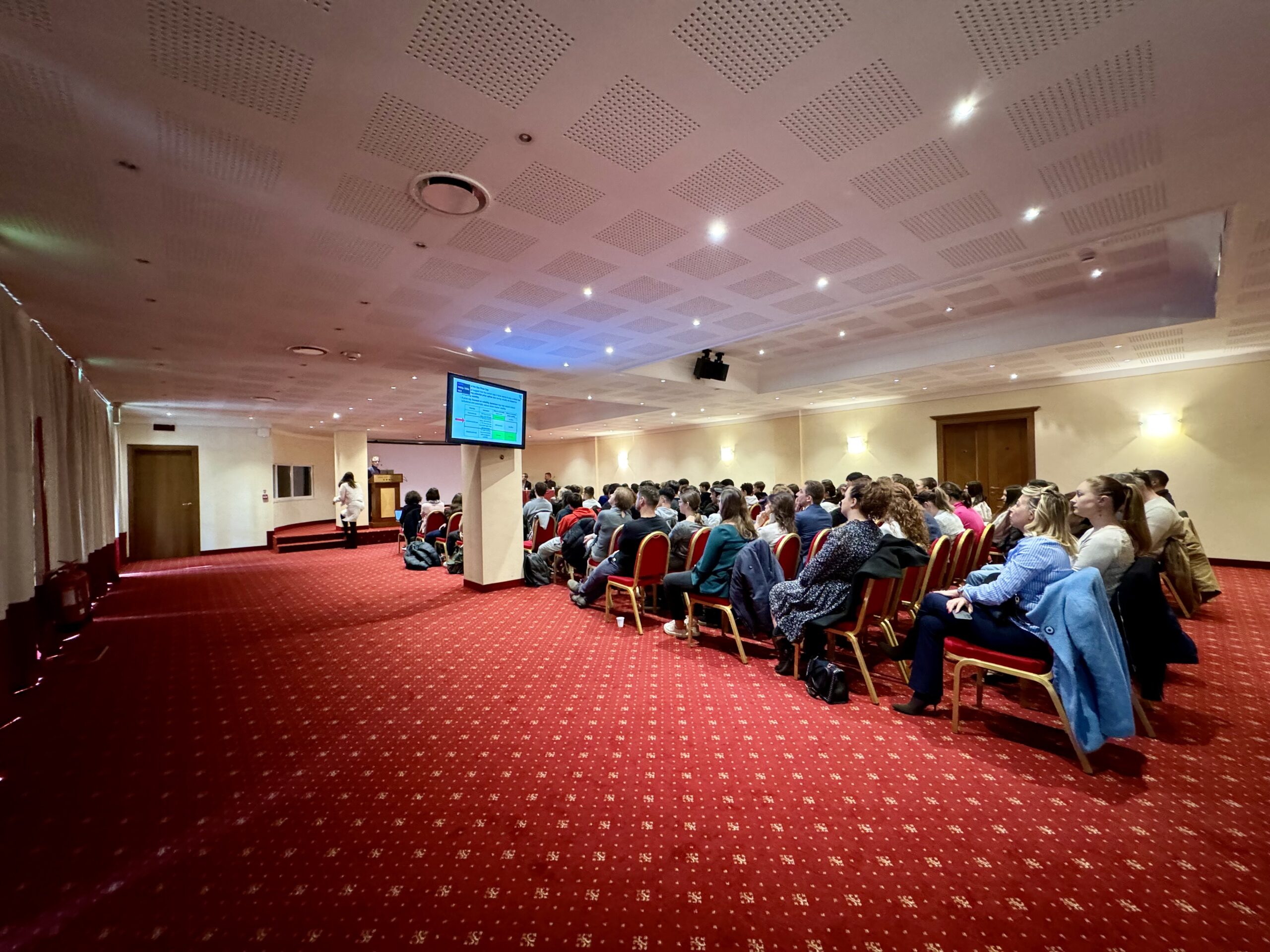
The format of each Roadshow was designed to move from knowledge to action within two days. Day one opened with a plenary presentation, followed by three parallel thematic workshops: one on sustainable SMEs business models (led by the Project’s Coordinator Italbiotec), one on social innovation for SMEs (CSI Cyprus Centre for Social Innovation), and one on access to EU finance and related funding (Cleantech Bulgaria). The afternoon transitioned directly into the Hackathon — the event’s operational core. Teams were briefed on a locally defined challenge; they were assigned both a technical and a business mentor and began developing their solution. Day two was given over entirely to concept refinement, prototype development, and the preparation of a final pitch. The pitching session — the Hackathon’s third and closing stage — brought solutions before an evaluation board of up to seven members drawn from consortium partners, local industry, and public institutions.
The evaluation criteria were consistent across all three locations where the Roadshows took place: challenge alignment, innovation potential, and team expertise. The four teams selected at each event were not declared winners in any conventional sense — they were offered entry into DRIVE’s mentoring program, a subsequent phase of up to 20 hours of individual support. This distinction matters: the Roadshow-Hackathon is not an accelerator; it is an activation event. Its output is not finished ventures but selected candidates for a process that, by design, does the substantive work that follows.
Governance as translation: who was responsible, and why it mattered
The Network of European Rural Lakes nEUlakes coordinated the implementation of the three Roadshows. At first glance, this choice might be unexpected. It is not a bioeconomy research institute, a startup accelerator, or a business support organization, but a rural network. That is precisely the point. The three host municipalities — Bohinj in Slovenia, Emmanouil Pappas in Greece, and Le Bourget-du-Lac in France — are all members or partners of nEUlakes. The consortium’s capacity to organize events in these locations depended not on technical expertise in bioeconomy, but on pre-existing relationships between nEUlakes and local institutions.
The host municipalities were not passive venues. Participants were recruited directly, mobilizing local business associations and agricultural cooperatives. The decision to have local partners send official invitation emails to selected applicants, rather than routing communications through the project coordinator, was deliberate. A farmer in Bohinj receiving a letter from his municipality reads it differently than one receiving a letter from a consortium office in Milan. Institutional trust is geographically distributed, and the governance structure behind this phase was designed to work with that fact rather than around it.
The technical and methodological content of the events was distributed across specialist partners according to expertise: F6S managed the application platform and mentoring architecture; Cleantech Bulgaria led the EU finance workshops; CSI Cyprus facilitated social innovation sessions. During 2025, the consortium met biweekly every Wednesday morning to jointly monitor project implementation. What this rhythm produced, beyond coordination, was a shared operational language — the kind that makes rapid contingency responses possible when the planned approach proves insufficient.
Bohinj, Slovenia — the language of innovation
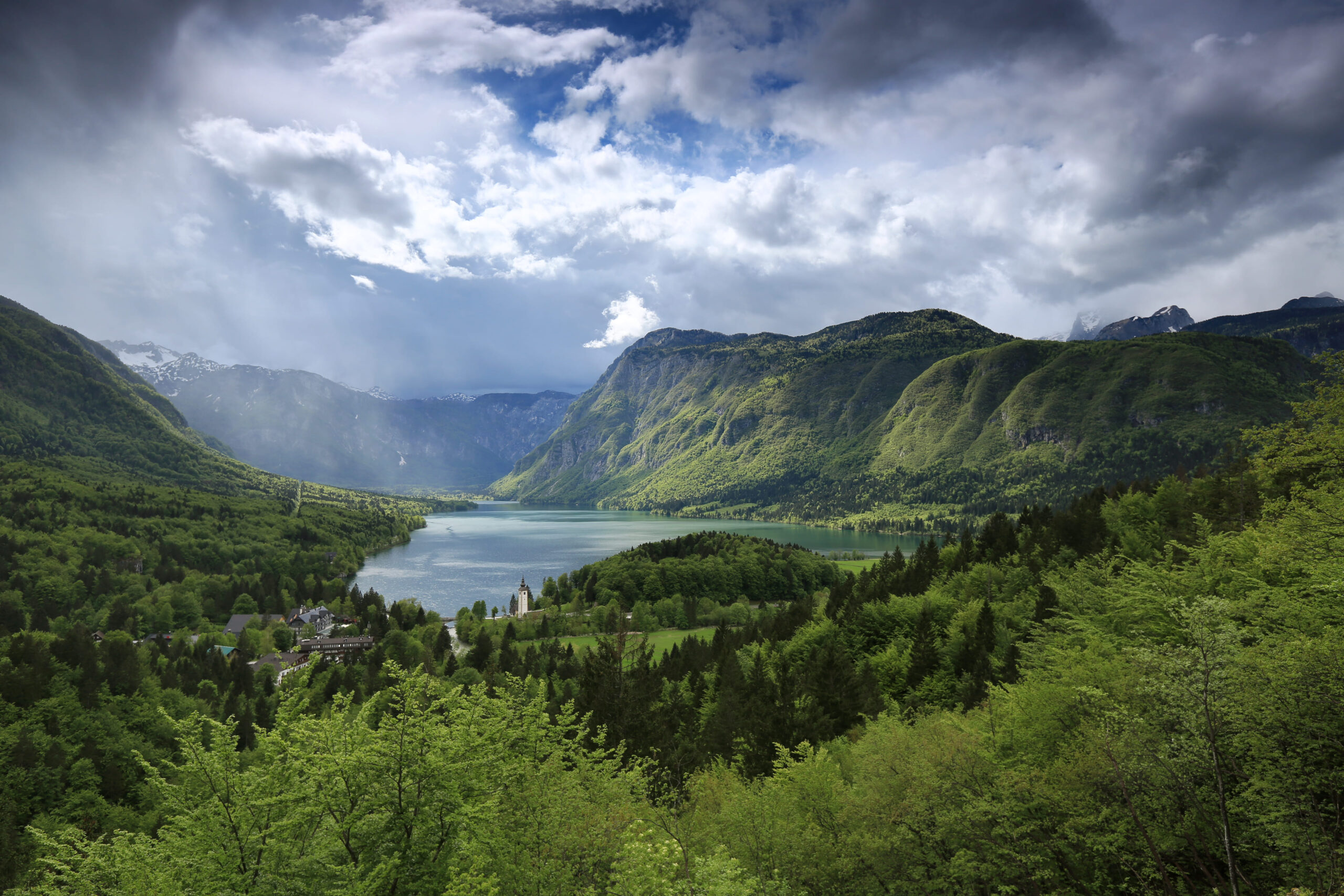
The first Roadshow took place in October 2025 at the Bohinjska hiša in Bohinjska Bistrica. The challenge “Grown here, served here” asked participants to address the structural fragmentation of the Julian Alps’ agri-food supply chain: a region that produces quality food but routinely loses it to urban distribution networks, leaving local restaurants sourcing from supermarkets while nearby farms struggle for buyers. Teams proposed digital platforms connecting producers directly to hospitality operators, real-time stock availability systems, and QR-code traceability tools designed to certify and communicate territorial origin. The conceptual quality of the proposals was genuine.
The participation, however, was partly affected by difficulties in communication between entities. Of 15 applications received, 11 teams were selected; 4 were rejected because their startups were registered outside the EU. The evaluation jury found that several proposals lacked sufficient alignment with the municipality’s specific challenge and ultimately selected 3 teams for mentoring. The consortium’s own analysis concluded that the shortfall had to be attributed to linguistic barriers and the region’s geographic distance from established innovation networks. The language of the event — English, with the conceptual vocabulary of circular bioeconomy and European funding instruments — was not the working language of the Slovenian farmers and food producers DRIVE most needed to reach.
The response was instructive. The consortium created a YouTube channel to make workshop recordings available asynchronously; produced and translated a summary brochure into Slovenian, distributing it through chambers of commerce and municipal contact databases; and launched a targeted awareness campaign combining simplified social media posts with testimonials from participating mentors. These were effective contingency measures. They were also evidence that linguistic and cultural translation had been treated as a secondary concern when it should have been a design parameter.
Serres, Greece — energy without infrastructure
The second Roadshow, held at the International Hellenic University in Serres in November 2025, produced a different set of data and a different set of questions. The Municipality of Emmanouil Pappas had put great effort and invested months in preparation, gaining significant local visibility for the project before applications had even opened. The results were encouraging: 35 applications, 24 selected teams, and 125 participants attended across the two days. The challenge, framed around renewable biological resources across agriculture, bioenergy, and circular waste management, matched the region’s strong agricultural identity. One of the most compelling proposals was a small-scale biogas unit converting livestock waste into energy for rural households: low-tech, immediately viable, and entirely grounded in local resource flows. Five teams were selected for mentoring and received physical prizes — laptops and products from local companies — a detail that anchored the event in its territory rather than in the generic vocabulary of European innovation.
A significant proportion of participating teams were students or early-stage entrepreneurs operating at the very beginning of their development: with ideas, but without prototypes, customers, or business models. The lesson from Serres is that a two-day Hackathon can serve as a first point of contact between a young entrepreneur and the European innovation ecosystem, but it cannot substitute for the sustained support that converts that contact into a viable business. The mentoring phase should not just be a bonus for high performers, but a necessary infrastructure for anyone the Hackathon is genuinely trying to serve.
Le Bourget-du-Lac, France — when the infrastructure is already there
The third roadshow was held in December 2025 and hosted by Chambéry Grand Lac Économie: the economic development agency of the Chambéry metropolitan area, already embedded in one of Alpine France’s most established technology clusters, a business park housing over 160 companies alongside the Savoie-Mont-Blanc University research infrastructure. 118 participants attended in person. No contingency measures were necessary and no brochures needed translation. The challenge – “Technolac 2050: A Hackathon Serving Symbiotic Innovation” – asked teams to design cooperative loops between businesses, research centres, and local communities within the park: one organization’s waste stream can become another’s input.
The event expanded beyond the standard three workshops, introducing two additional thematic sessions: one on circular economy systems and one on regenerative tourism. Le Bourget-du-Lac is a lakeside commune; sustainable tourism is not a peripheral economic concern but a structural one. Four teams were selected for mentoring, and participant feedback indicated high satisfaction with mentor quality and the cross-sector interactions the format enabled.
Conclusion
The Le Bourget experience demonstrates that the Roadshow-Hackathon model is not self-sufficient. Its impact is proportional to the strength of the local ecosystem that receives it. In Bohinj, the consortium had to build the conditions for participation from scratch. In Serres, a committed municipality supplied the energy that offset an underdeveloped local innovation infrastructure. In Le Bourget, a pre-existing institutional network amplified the event’s reach and quality at every stage. For policymakers designing similar interventions, it implies a necessary prior question: before asking what a Roadshow or Hackathon can do for a rural community, it is worth asking what that community already has that such an event can build on.
Related News & events